How to ensure your wedding cake is sustainable with Cake On The Lake

In the current issue, we asked the region's experts for their advice on how to plan a sustainable wedding. Here Clare Deary from Cake On The Lake in Liverpool tells us how to give the big-day bake some eco-friendly thought.

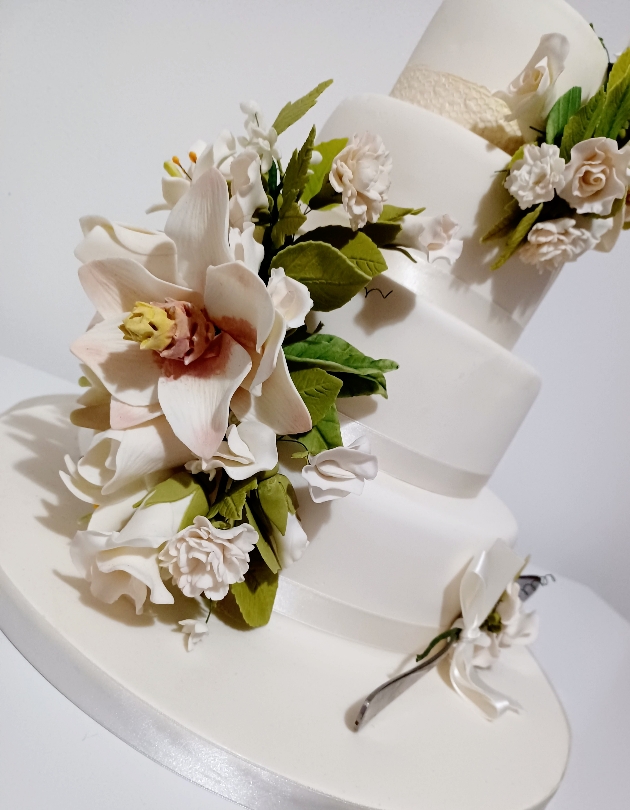
Wedding cake by Cake on The Lake with white sugar flower decoration

All of the ingredients for my wedding cakes are sourced responsibly, minimising any negative impact on the environment. Where relevant and possible, I purchase ingredients with recyclable packaging. I'm also reducing my food miles by using locally-sourced, British seasonal ingredients. Some of these include British flour; Fairtrade sugar; truly organic free-range, locally-sourced eggs; British milk and cream with high animal welfare standards and a fair price for farmers; unrefined icing sugar; and much more. Another way wedding cake makers such as myself can ensure your big-day bake is sustainable is to use a recipe like Madeira sponge, which will last longer and prevent waste. If you do have some left over though, it's usually still tasty to eat two to three days afterwards. My cakes are never frozen, so you can always pop left over slices in the freezer and enjoy them over the following months. A further way to minimise waste is to serve your showstopping bake as a dessert.

Using natural decorations to adorn your cake means there are fewer materials left for landfill once it's been eaten and the boards recycled. Why not try edible sugar flowers, which can be displayed in your home afterwards, or fresh flowers that can be pressed? Alternatively, opting for a naked bake uses less ingredients and is also cheaper for you.

So many processes in baking involve the use of plastic – piping bags, baking paper, spatulas. Then there's the transportation of the final product to think about. Many boxes created for storing and moving cakes will also use plastic in one way or another. Trying to reduce this will make a difference. Some may be unavoidable, but as awareness of plastic use rises, many more ethical options have become available.

You may also be interested in

New app launches to simplify one of marriage’s biggest admin headaches

New app launches to simplify one of marriage’s biggest admin headaches

Changing your name after marriage can mean updating details with countless organisations, from banks and subscriptions to official documents and employers. New app Name Change Navigator aims to make the process easier, guiding newlyweds through each step from one platform. Founded by Rebecca Dainton, Head of Product at Flutter UK & Ireland, the app was created to reduce the stress and mental load associated with name changes. It supports a range of naming journeys, including traditional surname changes, double-barrelling, blended surnames and other choices following marriage, civil partnership, divorce or personal identity changes. The launch comes as younger generations increasingly rethink traditional naming conventions, with technology offering a more streamlined approach to this often-overlooked part of newlywed life.

READ ARTICLE

From best mates to distant relatives: Brits reveal the wedding gift hierarchy

From best mates to distant relatives: Brits reveal the wedding gift hierarchy

How much should you spend on a wedding gift? It seems the answer depends on just how well you know the happy couple. New research from One4all Gift Cards has revealed that almost half of Brits (49%) would spend less on a wedding gift if they were not particularly close to the couple. The relationship came out ahead of travel and accommodation costs (38%) and paying for a hen or stag do (28%) when it comes to factors influencing how much guests are prepared to spend. For those closest to them, Brits consider an average of £77 per person to be an acceptable wedding gift. The most popular amount was between £50 and £100, selected by 43% of respondents, while 36% believe spending up to £50 is perfectly acceptable. Just 5% would spend more than £200.

READ ARTICLE

Revealed: England and Wales’ most common wedding anniversary date as August accounts for nearly one in six

Revealed: England and Wales’ most common wedding anniversary date as August accounts for nearly one in six

1 September is the most common wedding anniversary date, with an average of 1,557 marriages taking place on the date, new analysis has revealed. The research, from drinks and gifting retailer Bottled and Boxed, analysed 22 years of marriage registration data from the Office for National Statistics to identify the dates when couples across England and Wales are most likely to be celebrating their wedding anniversaries each year. Every date in the top 10 falls between late July and early September, showing how heavily the most common anniversaries are concentrated in late summer. August is the most common month for wedding anniversaries, accounting for 15.7% of all marriages analysed, with an average of 1,254 couples married per day.

READ ARTICLE

Marriage law reform: what the Government’s proposals could mean for couples

Marriage law reform: what the Government’s proposals could mean for couples

Planning a wedding is fun, stressful, time consuming. Couples want a ceremony that reflects their taste, is reflective of their love for each other and feels unique. The current restrictions in place can sometimes fetter that. Long-awaited plans to modernise weddings law in England and Wales could give couples far greater freedom over where and how they marry. It is hoped that they may be part of a much wider transformation of family law which is going through the biggest shakeup in decades.

READ ARTICLE

Follow Your Cheshire & Merseyside Wedding Magazine on YouTube

VISIT SITE

Follow Your Cheshire & Merseyside Wedding Magazine on Instagram

VISIT SITE

Follow Your Cheshire & Merseyside Wedding Magazine on Facebook

VISIT SITE

Subscribe to Your Cheshire & Merseyside Wedding Magazine for free

VISIT SITE